

Choosing Age-Appropriate Stories by Developmental Stage
- child development
- reading
- ages and stages
Choosing age-appropriate stories has less to do with the age sticker on the cover than with your child's developmental stage — their attention span, vocabulary, and emotional world right now. Match the story to where your child actually is, and bedtime reading clicks.
The good news: you don't need a child-development degree. A few reliable patterns hold across most kids. Once you can spot them, you can pick books and adjust on the fly with real confidence.
How stories change by developmental stage
Infants and young toddlers (0–2): rhythm and connection. For the youngest listeners, the plot barely matters. Babies absorb the music of your voice, the warmth of being held, and the back-and-forth of shared attention. Favor very short texts, singsong rhyme and repetition, bold high-contrast pictures, and sturdy board books that survive being chewed. A ninety-second "reading" is a success — don't worry about finishing or reading in order.
Toddlers to preschoolers (2–4): naming the world. Now stories become a tool for making sense of daily life. Kids this age build vocabulary fast and care intensely about their own small dramas: bedtime, a new sibling, a lost toy, a big feeling. Stories that land have a single-thread plot — a character wants something, hits a small problem, works it out — which quietly teaches that troubles are temporary. Look for relatable themes, predictable structure with a little suspense, concrete new vocabulary, and interactivity like flaps and "what happens next?"
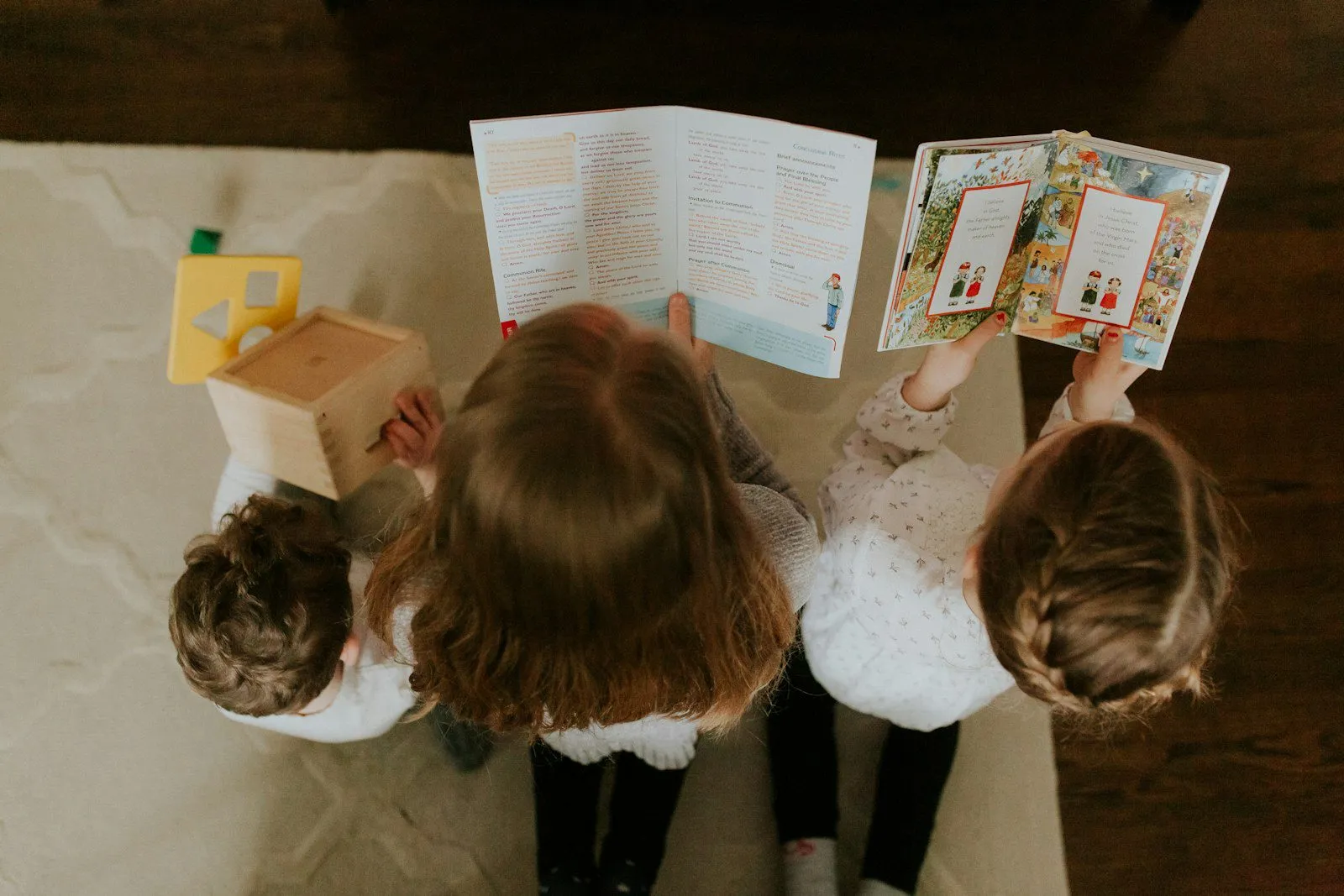
Preschoolers to early readers (4–7): plot and imagination. By four or five, kids follow longer, layered stories and hold several characters in mind at once. Their imaginations stretch past the everyday into dragons, space, and invented worlds, and they enjoy humor and mild suspense. This is the stage to lengthen and complicate: multi-part plots, bigger themes handled gently (courage, fairness, jealousy), playful language, and illustrations that add rather than repeat the words.
Keep reading above their reading level
As formal reading begins, a gap opens up: the books a child can decode alone are far simpler than the ones they can understand when you read aloud. Keep reading up. Read-aloud time feeds imagination and vocabulary well beyond a child's solo level, while independent reading builds the mechanics. Both matter, and they're not the same track.
Stretch gently, and adapt any story up or down
Age-appropriate doesn't mean always easy. Kids grow by reaching slightly past their current level — a gentle stretch, not a leap. Aim for stories that are mostly comfortable with a few new elements: a familiar structure carrying one unfamiliar word, a known theme explored a little deeper.
Let your child give you the real feedback, which beats any label:
- Leaning in and asking for "again" means you've hit the sweet spot.
- Fidgeting or glazing over usually means too long or too abstract for the moment — not that your child "can't focus."
- Distress at a scary part means the emotional content has outpaced them today. Slow down, talk it through, or set it aside.
None of these are permanent verdicts. A book that flops at three can be a favorite at five. And you're never bound to the text on the page: trim pages and lean on pictures to simplify, or add description and questions to enrich. This is one place a tool like Noctly can quietly help — because stories are generated around your child's name, age, and interests, the length and vocabulary tune to their stage rather than a one-size-fits-all level. But the same instinct works with any book on your shelf.
Key takeaways
- Developmental stage matters more than the age printed on the cover — read your child, not the label.
- Infants need rhythm and closeness; toddlers need relatable single-thread stories; early readers can handle longer plots and bigger themes.
- Keep reading above your child's independent reading level — read-aloud feeds vocabulary solo reading can't reach yet.
- Stretch gently: mostly familiar with a few new elements, and let leaning-in versus fidgeting guide you.
- You can adapt any story up or down by trimming or enriching it, so favorites grow with your child.