
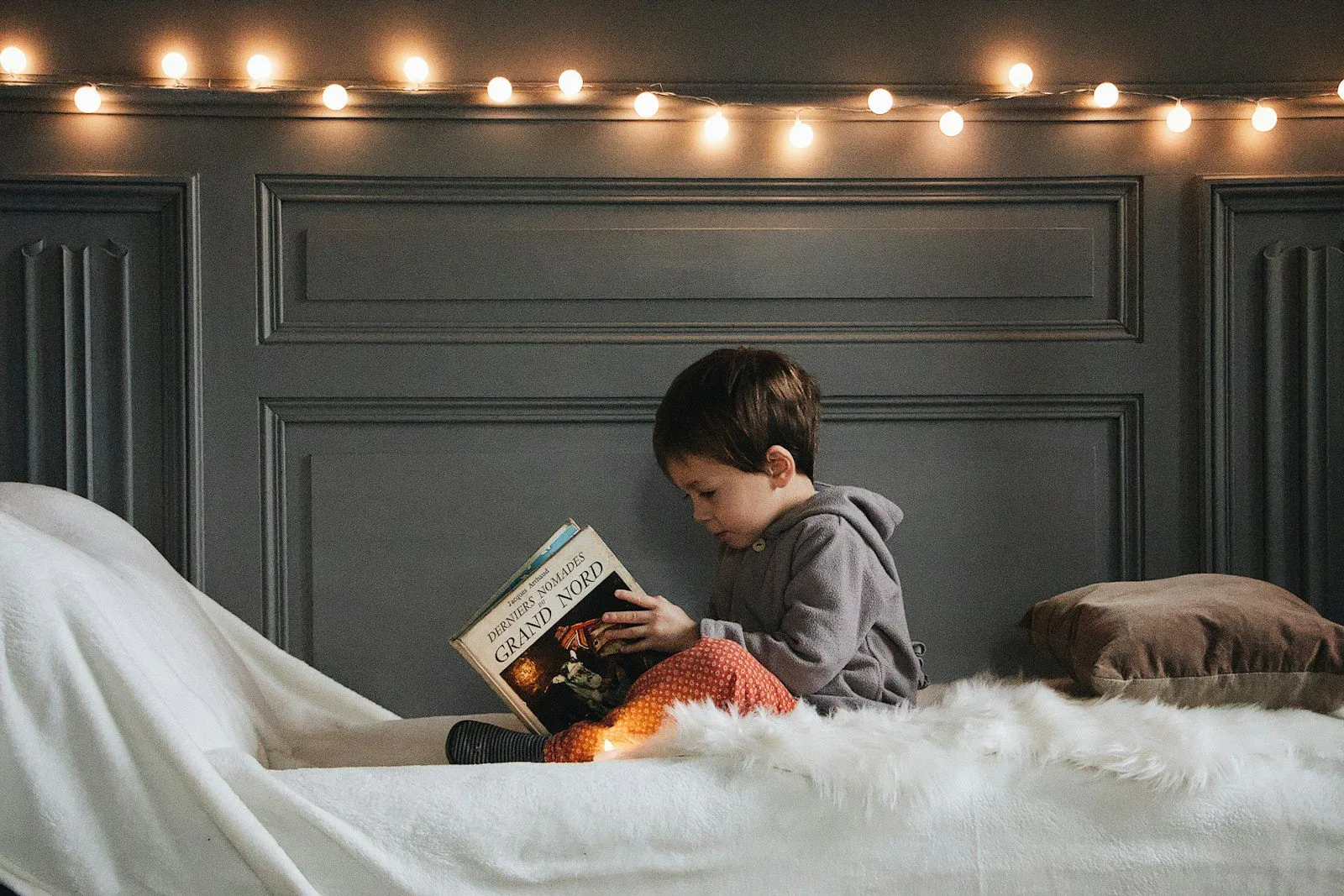
Building a 10-Minute Nightly Reading Habit
- reading habit
- routines
- parenting
Building a nightly reading habit is less about discipline than about wiring: ten minutes a night, done consistently, does more for your child than an hour done once in a while. The parents who read every night usually aren't more disciplined than you — they've just turned reading into a habit that runs on autopilot instead of willpower. Here's how to build one that actually sticks.
How a reading habit really forms
Habits aren't about motivation; they're about structure. The classic model breaks any habit into three parts: a cue that triggers it, a routine you carry out, and a reward that tells your brain "do that again." Line all three up and the behavior starts to feel automatic. Miss one — usually the cue or the reward — and you're back to relying on willpower, which is a battery that's always flat by bedtime.
For a nightly reading habit, the pieces look like this:
- Cue: something that already happens every night — teeth brushed, pajamas on, lights dimmed. You're not adding a reminder; you're anchoring reading to a thing you already do.
- Routine: the ten minutes of reading, kept small enough that it's never the thing standing between everyone and sleep.
- Reward: the closeness, the calm, your child asking for "one more" — the good feeling that makes tomorrow easier.
The most reliable trick here is habit stacking — attaching the new habit to an existing one. "After we brush teeth, we read one story" is far stickier than "we should read more." The old habit becomes the alarm clock for the new one.
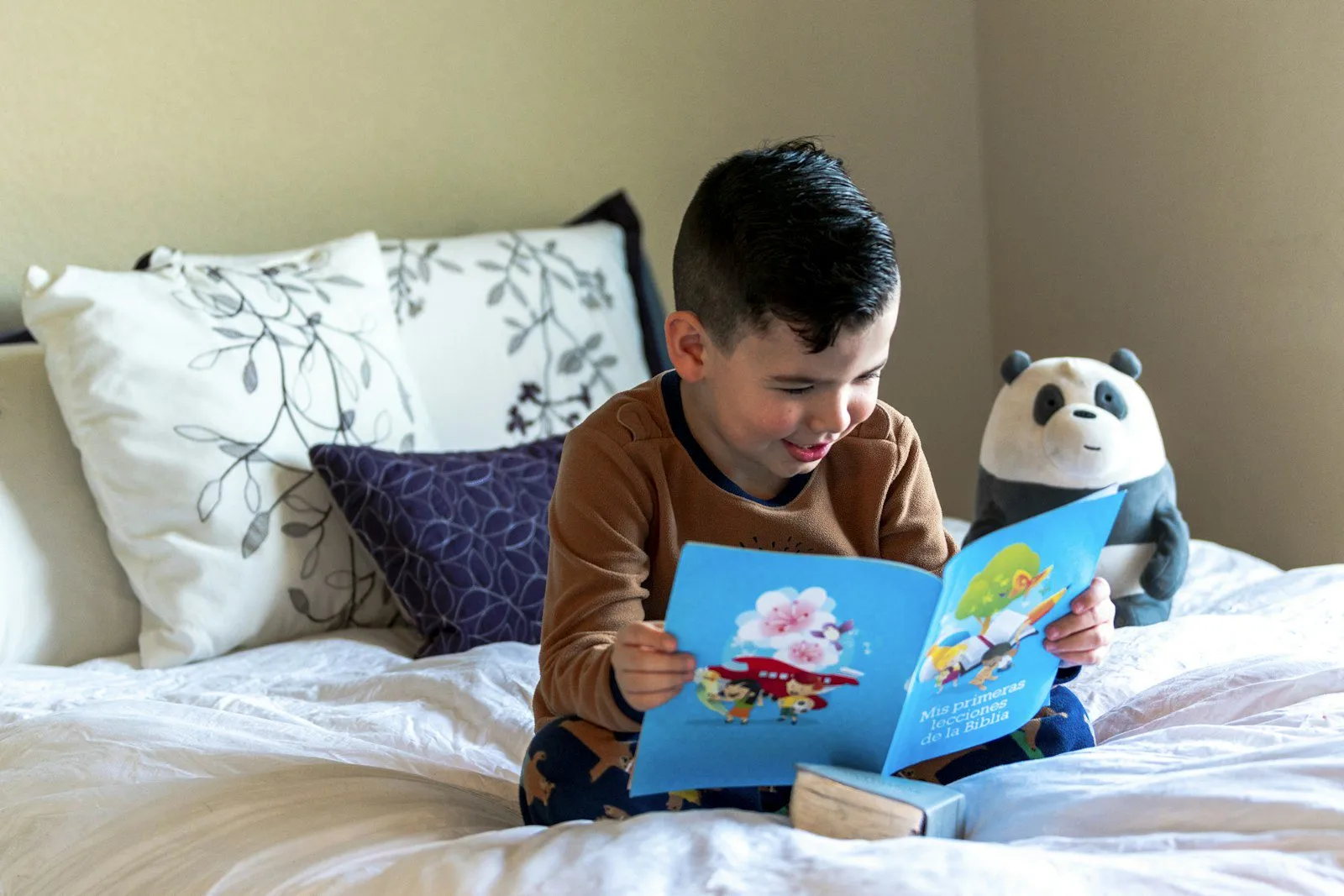
Why small and consistent beats long and sporadic
It's tempting to think a heroic 45-minute session on Sunday makes up for the four nights you skipped. It doesn't, and understanding why is freeing. Habits are built by repetition, not intensity. Every completed loop — cue, routine, reward — makes the pathway a little more automatic. Ten minutes Monday through Sunday gives your brain seven reps; one long session gives it one.
Short sessions are also more forgiving, and forgiveness is what keeps a habit alive over months. A ten-minute bar survives the bad nights — the late dinners, the meltdowns, the nights you're running on nothing. When the bar is low, you clear it even when depleted, and clearing it keeps both the streak and the identity of "we're a family that reads" intact. A 45-minute bar collapses the first hard week, and a broken habit is far harder to restart than to maintain. As a bonus, kids thrive on the predictability of a short, reliable ritual — the same sameness that makes a habit stick signals safe, calm, almost sleep to them.
Setting up your nightly reading habit so it runs itself
A little design up front does the work willpower can't. Make the habit obvious, easy, and pleasant.
- Pick a fixed anchor. Choose the existing nightly event you'll attach reading to and say it out loud as a rule: "After pajamas, we read." Same trigger every night.
- Make books findable. Keep a small, rotating stack right where you read. If starting requires hunting for a book, you've added friction — and friction is where habits die.
- Keep the bar tiny. The commitment is ten minutes or one story, not "read until they're asleep." A small, clearly finished goal is easy to start and satisfying to complete. Great nights run longer, but that's a bonus, never the requirement.
- Protect the calm. Dim the lights, lose the screens, use a quiet voice. That calm is the reward, and it's what your child's brain will start to crave.
- Have a low-effort backup. Some nights you have nothing left. Rather than skip — which weakens the habit — keep a fallback: a shorter book, an audiobook, or a narrated story your child can listen to while you sit beside them. A tool like Noctly is handy here because it can carry the read-aloud on the nights your voice is gone. The rule stays we read every night; only the effort flexes.
Getting past the usual obstacles
Even a well-built habit hits turbulence. A few common snags and how to handle them:
- "We're too tired / it's too late." Shrink the session before you cancel it. Two minutes done beats twenty minutes skipped, because the streak is what you're protecting.
- "My child won't sit still." Let them fidget, hold a toy, or listen lying down. Pick shorter, engaging books and let them choose. Engagement, not stillness, is the target.
- "They want the same book again." Let them — repetition is how young kids learn, and re-reading a favorite is real reading. Slip in something new now and then.
- "Our schedule is chaos." Anchor the habit to something portable — teeth get brushed everywhere — so it travels with you. Audiobooks and narrated stories shine on the road.
- "We broke the streak." Everyone does. The rule that keeps habits alive is never miss twice. One missed night is a blip; two in a row is how a habit quietly dies. Start again tomorrow, no guilt.
Track it gently if you like — a wall calendar with a sticker each night makes the invisible habit visible, and kids love not breaking a chain. Just keep it a celebration, never a scoreboard. The point was never a perfect record; it's a warm, dependable ten minutes that becomes simply how your family ends the day.
Key takeaways
- Habits run on cue, routine, and reward — anchor reading to something you already do every night so it runs on autopilot, not willpower.
- Small and consistent beats long and sporadic: ten minutes nightly gives your brain far more repetitions, and a low bar survives the hard nights.
- Design for success: a fixed anchor, books within reach, a tiny goal, a calm atmosphere, and an easy backup like a narrated story.
- Handle obstacles by shrinking the session rather than skipping it, and follow the rule never miss twice.
- Track progress gently to reinforce the reward, but drop any tracker that becomes a source of pressure.